
Flooding in Philadelphia does not look the same in every neighborhood. A rowhome in Lawncrest handles water differently than a commercial warehouse in Northeast Philadelphia. A finished basement in Southampton, PA can take on groundwater during heavy storms, while aging plumbing in older properties across Bucks County may fail without warning.
When water enters your property, the next steps determine how much of the structure and contents can be restored. Water damage restoration in Philadelphia requires fast action, technical accuracy, and clear documentation. Here is what to expect after flooding and how Rytech Restoration of Northeast Philadelphia guides homeowners, commercial property managers, and insurance professionals through recovery.
Immediate Safety After Flooding in Philadelphia and Bucks County
Water intrusion creates hazards quickly. Electricity, gas lines, and saturated building materials can turn a stressful event into a dangerous situation.
If safe, turn off electricity to affected areas. Shut off gas lines when appliances have been exposed. Avoid walking across saturated hardwood floors or basement steps where structural integrity may be compromised. In urban areas of Philadelphia and surrounding counties such as Montgomery and Delaware, stormwater can carry contaminants from streets and sewer systems.
Protective gear such as rubber boots, gloves, and masks reduces exposure until certified restoration professionals arrive. Limiting access to wet areas protects both occupants and the property itself.
Professional Assessment of Water Damage in Northeast Philadelphia
When our team arrives in Southampton or across Philadelphia County, we follow the ANSI/IICRC S500 Standard for Professional Water Damage Restoration . This standard establishes the inspection, measurement, and documentation process used by certified restorers.
Visible water often represents only a portion of the damage. Moisture migrates into wall cavities, subfloors, insulation, and structural framing. We use professional moisture meters to measure material saturation and infrared imaging to locate hidden moisture behind finished surfaces.
A historic brick rowhome in Philadelphia responds differently to water than a newer home in Downingtown or West Chester. Accurate data guides the drying strategy and reduces unnecessary removal of materials.
Understanding Water Categories and Health Risks
Not all water intrusion carries the same level of contamination. The ANSI/IICRC S500 defines three categories of water , and identifying the correct category shapes the response.
Clean water typically comes from broken supply lines or rainwater intrusion. Gray water may originate from appliances and contains moderate contamination. Black water includes sewage backups or floodwater entering from outdoor sources, which can introduce bacteria and other harmful contaminants.
Time changes water conditions. Clean water left untreated will deteriorate into a more contaminated category. Immediate mitigation prevents that progression and limits structural impact.
Contacting 24/7 Emergency Water Damage Restoration in Philadelphia
Flooding rarely occurs during business hours. Basement flooding in Pottstown or pipe bursts in Landsdale can happen overnight.
Rytech Restoration of Northeast Philadelphia provides 24/7 emergency response because rapid action will reduce drying time and minimize damage. During your first call, we gather details about the source of water, timing, and safety concerns. Certified technicians arrive equipped with commercial extraction tools and advanced drying equipment.
If you need professional water damage restoration in Philadelphia, our team combines local knowledge of Bucks and Philadelphia counties with national resources and over 30 years of industry experience .
Water Extraction and Controlled Drying
Removing standing water quickly limits absorption into framing, subfloors, and insulation. Commercial-grade pumps and extraction equipment eliminate bulk water efficiently.
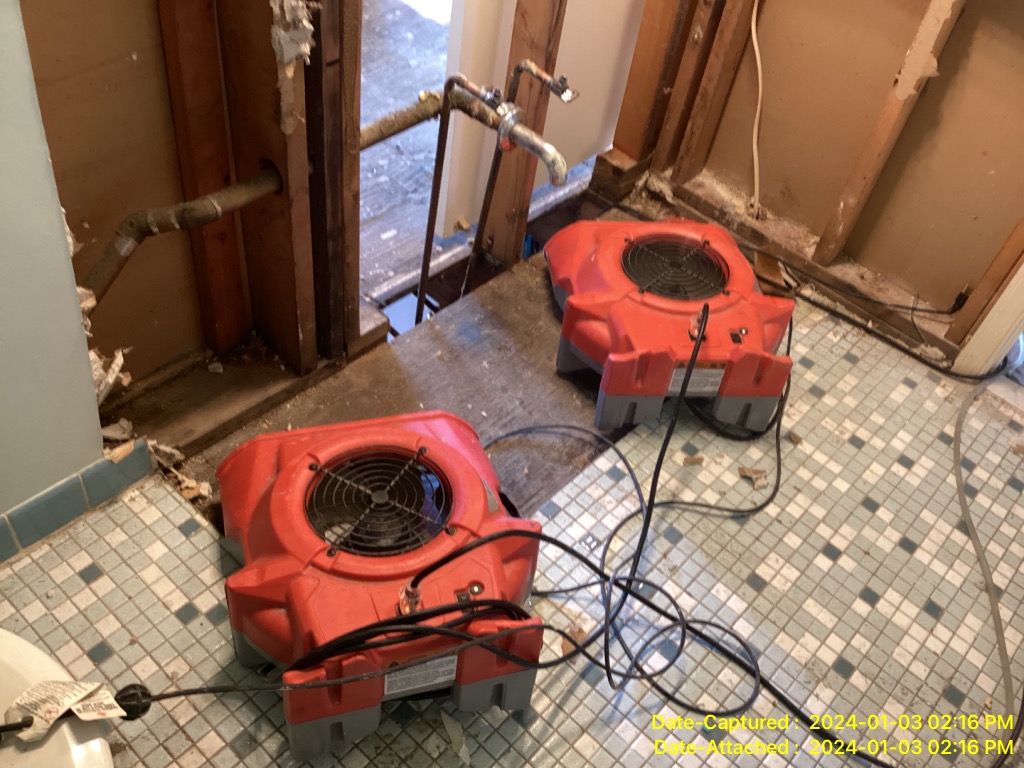
Drying requires more than air movement. The ANSI/IICRC S500 outlines psychrometric principles that govern evaporation and dehumidification . Air movers create consistent airflow across wet surfaces, while commercial dehumidifiers remove moisture from the air. Together, these systems accelerate the drying process.
Pennsylvania’s seasonal humidity and cold winters require careful environmental control. Daily monitoring of moisture levels ensures materials reach appropriate drying goals before moving to the next stage.
Mold Prevention and Professional Remediation

Moisture left untreated in basements and wall cavities creates ideal conditions for mold growth. The ANSI/IICRC S520 Standard for Professional Mold Remediation establishes procedures for containment, removal, and cleaning.
Our approach begins with moisture control. Without moisture, mold growth cannot continue. When microbial contamination is identified, we establish containment barriers, use HEPA filtration, and remove porous materials beyond restoration. Structural components are cleaned carefully to reduce airborne mold spores to normal indoor levels.
“Rowhomes and older properties across Philadelphia and Bucks County often have tight wall assemblies and finished basements. After years serving this region, we understand how water travels behind plaster and drywall. Rapid drying and proper containment protect framing and interior finishes before small moisture issues become larger problems.”
Bill Crouthamel, Owner, Rytech Restoration of Northeast Philadelphia
Structural Damage Inspection and Salvage Decisions
Water affects materials in stages. Hardwood floors can cup and buckle. Drywall may lose structural stability. Drop ceilings in commercial properties across Lehigh or Camden counties can trap hidden moisture.
We evaluate flooring systems, framing, ceiling assemblies, and foundations using moisture meters and thermal imaging. Data determines whether materials can be restored safely or must be removed.
Restoration remains the priority whenever possible. Removing only what cannot be salvaged reduces cost and disruption.
Salvaging Personal and Commercial Contents
Flooding does not stop at structural materials. Furniture, electronics, documents, and retail inventory may be affected.
We sort contents carefully. Restorable items are cleaned and disinfected using industry-approved methods. Specialty drying techniques may be used for important documents and electronics. For commercial clients in Burlington, Gloucester, or Chester counties, packout services support business continuity while structural drying continues.
Protecting contents reduces financial loss and emotional stress.
Insurance Claims and Professional Documentation
Navigating the insurance process often feels unfamiliar to property owners. Clear documentation supports smoother communication.
The ANSI/IICRC S500 outlines administrative and documentation procedures . We photograph affected areas, record moisture readings, and prepare detailed scope documentation aligned with industry standards. Rytech’s national infrastructure and insurance relationships support accurate reporting.
Insurance adjusters and agents rely on organized, measurable data to evaluate claims. Our role is to provide precise information that supports informed decision-making.
Cleaning and Sanitizing Affected Areas
After drying is complete, cleaning begins. Surfaces exposed to contaminated water are treated with EPA-approved disinfectants applied according to manufacturer guidelines.
Porous materials beyond restoration are removed. Remaining structural components are cleaned thoroughly to reduce bacteria, contaminants, and odors. This stage prepares the property for safe re-occupancy.
For restaurants, offices, and multifamily properties across Philadelphia and surrounding counties, sanitation supports reopening with confidence.
Repair and Reconstruction Coordination
Once mitigation and cleaning are complete, the rebuilding phase begins. Essential utilities and insulation are prioritized to restore functionality.
While Rytech specializes in mitigation and restoration rather than full replacement, we coordinate closely with licensed contractors to ensure structural recovery proceeds smoothly. Clear timelines and communication reduce uncertainty for property owners and managers.
Preventing Future Flooding in Philadelphia Properties
After restoration, many property owners seek preventive measures. Installing sump pumps and backflow valves reduces basement flooding risk. Elevating appliances in flood-prone areas adds protection. Landscaping adjustments that direct water away from foundations provide long-term defense.
Routine plumbing inspections and gutter maintenance also reduce sudden water intrusion. Preventive action protects long-term property value.
Cost Factors and Budget Planning
Restoration costs depend on measurable variables. The size of the affected area, water contamination category, and duration of exposure all influence scope.
A localized appliance leak in Southampton differs significantly from widespread basement flooding in Northeast Philadelphia. Professional estimates outline scope clearly and align with industry pricing standards.
Transparent budgeting supports informed decisions for homeowners and commercial property managers.
Timeline for Water Damage Restoration
Most projects move through clear phases: emergency response, mitigation, structural drying, cleaning, and coordination for reconstruction. Drying often requires several days, depending on materials and environmental conditions.
Larger commercial properties or prolonged exposure may extend the timeline. Consistent communication keeps all stakeholders informed from start to finish.
Measured progress produces predictable results.
Choosing a Certified Water Damage Restoration Company in Philadelphia

Certification matters. IICRC-certified technicians follow recognized standards for water damage restoration and mold remediation . Experience with older Philadelphia construction and modern suburban properties across Bucks and Montgomery counties adds practical expertise.
Rytech Restoration of Northeast Philadelphia combines rapid response, advanced technology, centralized administrative support, and decades of national industry leadership . We focus on restoring materials whenever possible and documenting every stage carefully.
When flooding affects your property in Philadelphia, Southampton, or surrounding counties, taking immediate action will protect your structure and contents.


